Freeze Now, Impress Later: The Lithuanian Potato Dumpling That Makes Dinner Party Hosting Almost Too Easy
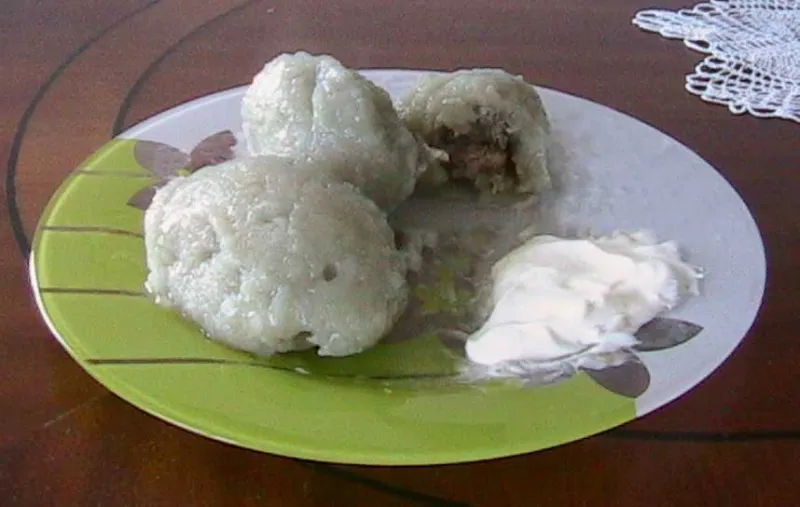
Photo: Unknown, Public domain, via Wikimedia Commons
There's a moment at every good dinner party when the table goes quiet. Not an awkward silence — the good kind. The kind where forks are moving and nobody wants to waste time talking. If you've ever served cepelinai to a crowd that had never tried them before, you know exactly what that moment feels like.
Cepelinai (pronounced tseh-peh-LEE-nay) are Lithuania's most celebrated comfort food, and honestly, calling them "potato dumplings" barely does them justice. These hefty, oblong parcels — shaped, yes, like the old German zeppelin airships they were nicknamed after — are made from a mix of raw and cooked grated potato, stuffed with seasoned ground pork, and boiled until they're tender, dense, and deeply satisfying. Served with a ladle of sour cream sauce and crispy bacon bits on top, they land on the table like a statement.
At Mama & Papa Lithuania, we've watched cepelinai go from a dish that required a full explanation to one that gets requested by name at second and third dinner parties. Here's why — and more importantly, how you can pull them off without turning your Saturday into a kitchen marathon.
A Little History Before the Dough
Cepelinai have been feeding Lithuanian families since at least the 19th century, when potatoes became a staple crop across Eastern Europe. The dish is deeply tied to the agricultural rhythms of rural Lithuania — potatoes were abundant, pork was the protein of choice, and nothing went to waste. Different regions developed their own variations: in Samogitia (western Lithuania), you might find cepelinai stuffed with farmer's cheese instead of meat, while some eastern recipes call for mushroom fillings that lean heavily on dried porcini for a woodsy, earthy punch.
The name itself came later, during the early 20th century, when zeppelin airships were flying over Lithuania and locals thought the dumplings bore a passing resemblance. It stuck. Today, cepelinai are considered Lithuania's national dish, the kind of food that makes Lithuanian-Americans a little misty-eyed when they haven't had them in a while.
The Science of Getting the Potato Dough Right
Here's where most first-timers run into trouble: cepelinai dough is not forgiving if you skip the details. The key is the ratio of raw to cooked potato, and moisture management is everything.
The standard approach calls for roughly two-thirds raw grated potato to one-third cooked, mashed potato. The cooked potato acts as a binder, giving the dough enough structure to hold together during boiling. The raw potato provides starch and texture.
The critical step? Squeezing the life out of your raw grated potato. After grating, you'll press it through a clean kitchen towel or cheesecloth to remove as much liquid as possible. Don't toss that liquid — let it sit for a few minutes in a bowl, and the potato starch will settle to the bottom. Pour off the water and scrape that starch back into your dough. It makes a real difference in cohesion.
For best results in American kitchens, russet potatoes are your friend. They're high in starch and low in moisture compared to waxy varieties, which means your dough will come together more reliably.
Quick ratio guide per 6 servings:
- 3 lbs russet potatoes (raw, grated and squeezed)
- 1 lb russet potatoes (boiled and riced or mashed)
- 1 tsp salt
- Reserved starch from the squeezed potato liquid
Combine everything until you get a dough that holds its shape when pressed. If it's crumbling, add a touch more mashed potato. If it's sticky and wet, you didn't squeeze hard enough — but you can still rescue it with a tablespoon of potato starch from the grocery store.
The Filling: Keep It Simple, Keep It Seasoned
Traditional cepelinai filling is ground pork — usually a 70/30 lean-to-fat ratio for juiciness — seasoned with salt, white pepper, and finely grated onion. That's really it. The restraint is intentional; the potato dough carries a lot of flavor on its own, and the sauce does the heavy lifting at the end.
For a modern twist, try mixing half ground pork with half ground veal, or adding a small amount of dried marjoram to the filling. Some Lithuanian-American families have started sneaking in a touch of smoked paprika, which adds a subtle warmth without straying too far from tradition.
Fill each dumpling with about 2 tablespoons of the meat mixture. Enclose it completely in the potato dough, shaping it into that characteristic oval — think of a flattened American football. Seal the seams well or they'll burst in the pot.
The Make-Ahead Move That Changes Everything
Here's the part Papa Lithuania swears by: freeze them before you boil them.
Once your cepelinai are shaped and sealed, lay them out on a parchment-lined baking sheet so they're not touching, and freeze them solid — usually 2 to 3 hours. Then transfer to a zip-lock freezer bag. They'll keep for up to 3 months.
When dinner party night arrives, you don't need to thaw them. Drop the frozen dumplings directly into a large pot of well-salted, gently boiling water. Fresh cepelinai take about 25 to 30 minutes; frozen ones need 40 to 45 minutes. They'll float to the surface when they're almost done — give them another 10 minutes after that.
This single strategy turns cepelinai from a labor-intensive same-day project into something you can prep on a quiet Sunday afternoon weeks in advance.
The Sauce: Don't Overthink It
The classic topping is beautifully simple: full-fat sour cream thinned with a splash of the cooking water, seasoned with salt, and poured over the top. Alongside that, fry up some diced bacon or pancetta until crispy and scatter it over everything. Some families add sautéed onions too.
For a slightly elevated dinner party presentation, stir a tablespoon of fresh dill into the sour cream sauce and add a small spoonful of caramelized onions on the side. It looks intentional without being fussy.
Serving Suggestions for an American Table
Cepelinai are rich — two per person is typically a full meal. Pair them with a simple cucumber and dill salad dressed with a little white vinegar and sugar, which cuts through the heaviness beautifully. A cold Lithuanian beer or a dry cider alongside is the move.
For guests who've never encountered Lithuanian food before, the reveal is half the fun. Set the platter down, let them ask questions, and watch the quiet descend.
That's the cepelinai effect. Once you've seen it, you'll be stocking your freezer all winter long.