Cook Like You Mean It: The Lithuanian Art of Feeding Everyone With Whatever's in the Kitchen
Photo: U.S. Navy photo by Photographer's Mate 3rd Class Tyler J. Clements, Public domain, via Wikimedia Commons
There's a word in Lithuanian kitchens that doesn't translate cleanly into English: išsiversti. It means something like "to manage," "to make do," or "to get by"—but in the context of food, it carries a kind of quiet pride. It's the word a grandmother uses when she turns a half-empty root cellar and some leftover pork fat into a dinner that feeds twelve people and still leaves them arguing over who gets the last bowl.
American home cooks are drowning in options. Recipe apps, meal planning templates, grocery delivery windows, Pinterest boards organized by macro ratios. And yet, somehow, food waste in the U.S. hovers around 30 to 40 percent of the total food supply. Something isn't working. The Lithuanian grandmother, meanwhile, never threw out a carrot top in her life.
The Mindset Behind the Magic
Traditional Lithuanian cooking wasn't built around recipes in the way we think of them today. It was built around seasons, resources, and instinct. You cooked what the garden gave you in July. You cooked what the cellar held in February. You used the fat from last week's roast to sauté this week's onions. Nothing was wasted because nothing could afford to be.
This isn't a romantic myth about peasant simplicity—it's a genuinely sophisticated culinary philosophy. Understanding flavor combinations, knowing how long a vegetable needs before it softens, recognizing when a broth needs acid or salt: these are skills, and Lithuanian home cooks developed them not from cookbooks but from repetition, observation, and cooking alongside someone who already knew.
Mama would look at a bunch of wilting beets, some cold buckwheat from two nights ago, and a jar of pickled mushrooms and see a complete dinner. That's not magic. That's a trained eye.
What "Making Do" Actually Looks Like
Let's get practical. Intuitive, flexible cooking doesn't mean cooking without knowledge—it means building enough foundational knowledge that you don't need a recipe to tell you what to do next.
Here's how Lithuanian kitchen logic tends to work:
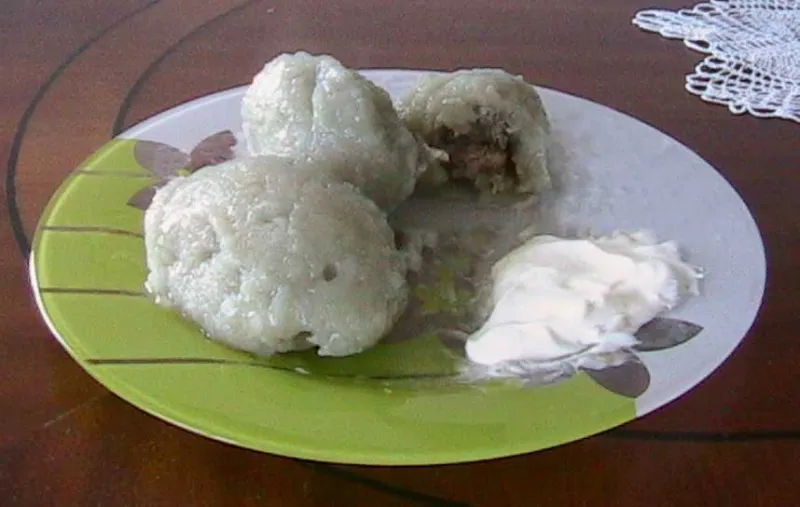
Start with what needs to go first. The slightly soft potato, the wilting dill, the half-used cabbage. These aren't problems. They're the beginning of dinner. In Lithuanian cooking, cabbage that's past its crisp prime is perfect for braising. Soft potatoes are ideal for dumplings or mashing into cepelinai filling. Wilting herbs get chopped and stirred into soups or mixed into butter.
Build around a fat and an allium. Almost every Lithuanian dish starts with onion (or leek, or garlic) cooked in lard, butter, or oil. That foundation carries flavor into everything else you add. Once you've got that going in a pan, you can add almost anything from the fridge and it'll taste intentional.
Acid is your reset button. A splash of apple cider vinegar, a spoonful of sour cream, a few tablespoons of fermented beet juice—these are the tools Lithuanian cooks use to balance a dish that's gone too heavy or too flat. Keep something sour in your kitchen at all times, and you can fix almost any meal.
Grains and legumes are the great extenders. Barley, buckwheat, and dried beans are pantry staples in Lithuanian homes because they stretch a small amount of protein into a full, satisfying meal. A modest piece of smoked pork becomes a hearty pot of soup once you add a cup of pearl barley and some root vegetables.
The American Kitchen Reboot
Adopting this approach in a modern American home doesn't require a complete lifestyle overhaul. It starts with a few small shifts.
Stop buying to a recipe list. Start buying to a category list. Instead of shopping for the exact ingredients in a specific dish, shop for types of things: a leafy green, a root vegetable, a protein, a grain, something fermented or acidic. Then decide what you're making when you get home and look at what you've got.
Keep a "use it first" shelf in your fridge. Designate one visible spot—eye level, front and center—for anything that needs to be eaten soon. Before you plan any meal, check that shelf. Lithuanian cooking was always about priority: use what's closest to turning before you open something fresh.
Learn five base dishes cold. By heart, no recipe needed. A simple soup, a grain porridge, a pan of braised vegetables, a dumpling or fritter, and something egg-based. In Lithuanian kitchens, these are the templates onto which seasonal ingredients get swapped in and out all year long. Once you know the template, the specific vegetables or proteins become almost interchangeable.
Embrace the half-portion leftover. American cooking culture tends to treat leftovers as a failure or a compromise. Lithuanian cooking treats them as a head start. Cold buckwheat becomes tomorrow's skillet cake. Leftover cabbage rolls get chopped and stirred into a broth. Nothing sits in the fridge waiting to be eaten "as is"—it waits to become something new.
What Mama Knew That We Forgot
Here's the honest truth: the reason Lithuanian grandmothers could feed a crowd without a plan wasn't just frugality. It was confidence. Confidence born from cooking the same way, day after day, season after season, until the kitchen stopped being a place of anxiety and became a place of fluency.
That fluency is available to anyone. It just takes a little practice and a willingness to let go of the idea that every meal needs a blueprint.
Start this week. Pick one night where you don't look at a recipe. Open the fridge, check the pantry, and ask yourself what Mama would do. Chances are, there's dinner in there already—it just needs someone willing to see it.
The grocery bill gets smaller. The food waste gets lighter. And somewhere, a Lithuanian grandmother nods with quiet approval.