What Grandma Was Simmering Before Bone Broth Had a Brand Deal
Somewhere in America right now, someone is paying $14 for a small cup of bone broth at a wellness counter, convinced they've discovered something revolutionary. Meanwhile, Lithuanian mothers everywhere are raising an eyebrow so high it could touch the ceiling.
Bone broth didn't get invented by a startup. It didn't emerge from a longevity podcast or a celebrity detox plan. It came from kitchens like the ones Mama Lithuania has been running for generations — kitchens where throwing away bones was simply unthinkable, and where the slow simmer of a pot on the back burner was just Tuesday.
Let's talk about what that tradition actually looks like, why it works, and how you can bring it into your own home without spending a dime on a trendy supplement.
Nothing Wasted, Everything Nourishing
Lithuanian cooking has always operated on a philosophy of total use. When a chicken was prepared for Sunday dinner, the meat fed the family, the fat was rendered for cooking, and the bones went straight into a pot of cold water before the plates were even cleared. This wasn't a wellness strategy. It was economics, common sense, and a deep respect for the animal and the effort it took to put food on the table.
The result — a long-simmered, golden, deeply savory broth — happened to be extraordinarily good for you. Collagen, gelatin, minerals like calcium and magnesium, amino acids like glycine and proline: they're all there, coaxed out slowly by time and gentle heat. Lithuanian cooks didn't have the vocabulary for it, but they knew the outcome. Sick kids got broth. Tired adults got broth. A pot of it in the fridge meant dinner was never more than twenty minutes away.
The Lithuanian Method: Slow, Simple, and Unapologetically Unfussy
Here's the thing about traditional Lithuanian bone broth that sets it apart from some of the more elaborate preparations you'll find in trendy cookbooks: it doesn't require much. A pot. Water. Bones. A few vegetables. Time.
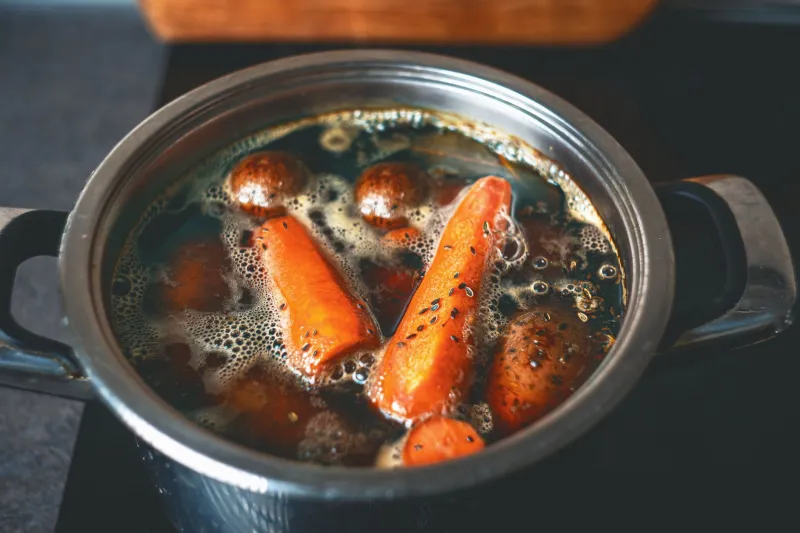
Papa Lithuania's version starts with whatever bones are on hand — beef knuckles, chicken backs, pork ribs, even fish frames for a lighter coastal-style stock. The bones go into cold water first, which is a step a lot of home cooks skip but really shouldn't. Starting cold and bringing things up slowly pulls more from the bones than dropping them into boiling water. A splash of apple cider vinegar goes in early — an acidic addition that helps draw minerals out of the bone itself. It sounds like a wellness hack, but Lithuanian cooks have been doing it with a glug of homemade vinegar for as long as anyone can remember.
From there, it's patience. A proper broth simmers for hours. Beef bones benefit from eight to twelve hours on low heat. Chicken can be done in four to six. The smell that fills the house during those hours is something between comfort and medicine — warm, savory, deeply familiar in a way that's hard to explain unless you grew up with it.
Onions, carrots, celery root, bay leaves, and a few black peppercorns round things out. Some cooks add dried mushrooms, which gives the broth an earthy, almost smoky depth that's very distinctly Lithuanian. Strain everything out at the end, and what you're left with is liquid gold.
Why It Actually Beats the Stuff in the Store
Commercial bone broth — even the expensive, artisanal kind — is made under time pressure and at scale. It often gets boosted with yeast extracts or flavor concentrates to compensate for a shorter cook time. The homemade version doesn't need any of that because it's had time to develop real flavor and real gelatin content. You'll know you've done it right when your broth gels in the fridge overnight, turning jiggly and thick. That's collagen. That's the good stuff.
From a practical standpoint, homemade broth is also dramatically cheaper. A bag of chicken backs from your local butcher or grocery store costs almost nothing. Beef knuckles and feet — the most collagen-rich bones you can use — are often sold inexpensively precisely because most American shoppers don't know what to do with them. Lithuanian cooks have always known.
Making It Work in a Modern American Kitchen
You don't need a wood-burning stove or a farmhouse kitchen to do this right. A large stockpot works fine. A slow cooker is even better for overnight batches — set it before bed on low and wake up to a finished product. Instant Pot users can get a reasonable result in two to three hours, though purists will tell you the long simmer produces a superior gel. They're not wrong, but something is always better than nothing.
Once you have broth in the fridge or freezer, it becomes the backbone of your weeknight cooking in a way that store-bought stock simply can't match. Use it to cook grains — barley cooked in bone broth instead of water is a revelation. Use it as the base for Lithuanian-style soups like šaltibarščiai's heartier winter cousins, or for braising cabbage and root vegetables. Sip it straight from a mug when you're run down, the way Lithuanian mothers have prescribed it for centuries.
Freeze it in ice cube trays for easy portioning, or in quart containers if you go through it faster. A well-stocked freezer with four or five containers of homemade broth is, honestly, one of the most useful things you can keep on hand as a cook.
The Wellness Industry Caught Up to What Lithuania Already Knew
It's a little funny, when you think about it. Bone broth became a $2 billion industry in the United States on the back of benefits that Lithuanian families have been quietly collecting for generations without ever calling it a wellness practice. There were no influencers involved. No branded ceramic mugs or subscription boxes. Just a grandmother who wouldn't let a good set of bones go to waste.
That's the spirit Mama & Papa Lithuania has always tried to carry forward — the idea that the most nourishing food is often the simplest, the most resourceful, and the most rooted in a long history of people figuring out how to take care of each other with what they had.
Start a pot this weekend. Use whatever bones you have. Let it go low and slow. And when someone asks you about your wellness routine, you can tell them it's an old Lithuanian family recipe — because that's exactly what it is.