Sunday Afternoon, Lithuanian Style: Why Our Grandmothers Never Needed a Meal Prep App
Somewhere along the way, Sunday cooking became a chore with a checklist. You've seen the content: color-coded containers lined up on a counter, a single person standing over six pots, a podcast playing in the background because there's no one else in the room. Efficient? Sure. Soul-nourishing? Not exactly.
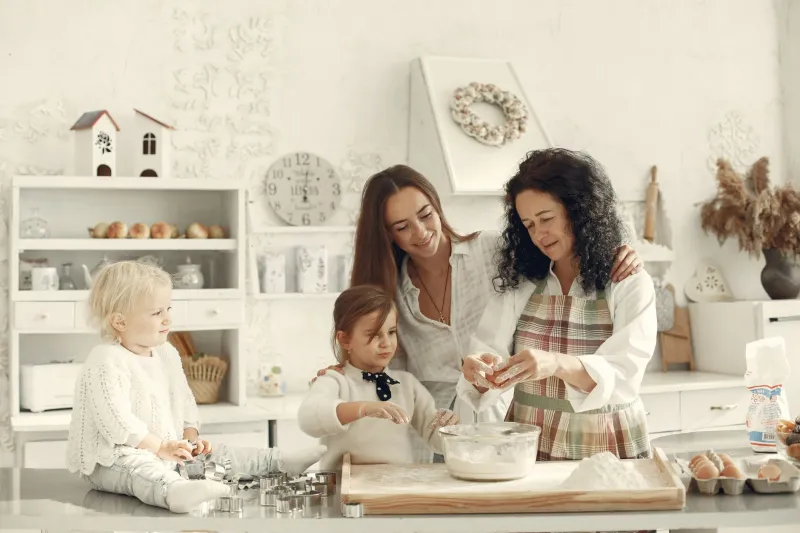
In Lithuania, Sundays in the kitchen have always looked a little different. Louder. Fuller. More chaotic in the best way. The table gets crowded before the food even hits it, and by the time everything is done, you've made enough to carry the whole week — not because you planned a macro-balanced menu, but because that's just what happens when three generations cook together and nobody wants to stop.
This is the Sunday ritual we grew up with at Mama & Papa Lithuania. And honestly? We think it's exactly what a lot of American families are quietly craving right now.
It Was Never Really About the Food
Here's the thing about the Lithuanian Sunday kitchen: the food is almost beside the point. Or rather, the food is the vehicle for everything else — the stories, the arguments about how much dill is too much dill, the grandmother who insists her way is the only way, the teenager who gets drafted into peeling potatoes and ends up learning something without realizing it.
In Lithuanian culture, the idea of šeimos tradicijos — family traditions — runs deep. Sunday cooking wasn't scheduled. It didn't require a Notion template. It happened because it was simply what you did. Someone started a pot of soup. Someone else remembered there was cabbage that needed using. A cousin showed up. More food got made. That's the whole system.
Contrast that with the modern meal prep model, which is fundamentally designed for one person operating alone. It's optimized for efficiency and individual convenience, which are fine goals — but they quietly strip out everything that makes cooking feel like anything other than a task.
What Actually Gets Made on a Lithuanian Sunday
The lineup varies by family and season, but a traditional Lithuanian Sunday afternoon of cooking might produce some combination of the following: a big pot of šaltibarščiai (cold beet soup, especially in summer), a tray of cepelinai (those legendary potato dumplings stuffed with meat), a loaf of dark rye bread if someone's been tending a starter, a jar or two of pickled something, and almost certainly a pot of barščiai — the beet borscht that shows up at nearly every occasion.
None of this was cooked with the week's lunches in mind. It was cooked because Sunday was the day you had time, family was around, and feeding people is an act of love that Lithuanians take pretty seriously. The leftovers carrying you through Thursday was a happy consequence, not the mission statement.
The skills transferred in those kitchens — how to judge when a dough is ready by feel, how to balance the sour-salty-savory profile that runs through so much Lithuanian cooking, how to make a little go a long way — those aren't things you pick up from a recipe card. They come from standing next to someone who knows, watching their hands, asking questions, making mistakes with a safety net nearby.
Why American Families Are Ready for This
There's a reason the phrase "meal prep" has started to feel exhausting to a lot of people. It promised to solve the weeknight dinner problem, and it does — sort of. But it also turned Sunday into an extension of the workweek, another productivity session to optimize. And for families especially, it can quietly reinforce the idea that cooking is a solo burden rather than a shared experience.
What we're hearing from families who've started cooking the Lithuanian way — whether they have Lithuanian roots or just stumbled onto the approach — is that the shift feels significant. When Sunday cooking becomes a gathering instead of a task, kids actually participate. Older relatives have a reason to come over. Couples cook side by side instead of dividing the labor into separate efficiency tracks.
One mom we know in Chicago started making bulvių plokštainis (Lithuanian potato pudding) with her kids every other Sunday after her own Lithuanian grandmother passed it down. She told us it's the one activity her three kids — ages seven, twelve, and fifteen — will all do together without complaint. The fifteen-year-old has started improvising on the recipe. That's the tradition working exactly as intended.
How to Start Your Own Lithuanian Sunday
You don't need a Lithuanian grandmother in the room to begin, though it helps. You just need to shift the framing.
Instead of asking "what do I need to prep for the week," ask "what do we want to cook together today?" Pick one or two dishes that are hearty and make a lot — cepelinai are perfect for this because they freeze beautifully and take enough hands-on time that everyone can be involved in some stage of the process. Add a simple soup or a batch of fermented vegetables if you're feeling ambitious.
Invite someone. A neighbor, your parents, a friend who's been meaning to learn how to cook. The Lithuanian Sunday kitchen was never a closed system — there was always room for one more person and one more dish.
Put on some music, accept that the kitchen is going to get messy, and resist the urge to photograph everything for content. This one's just for you.
By late afternoon, you'll have a refrigerator that's actually stocked, a kitchen that smells incredible, and — if it goes the way it's supposed to — a few memories that have nothing to do with productivity.
The Rhythm That Carries the Week
What Lithuanian families understood intuitively, and what the meal prep industry has accidentally tried to replicate without the soul, is that one good Sunday in the kitchen creates a rhythm. When Wednesday night comes and you're tired and nobody wants to cook, you open the fridge and there's already something there — not because you executed a plan, but because your family spent a Sunday afternoon together doing something that mattered.
That's the Mama & Papa Lithuania version of weeknight sanity. Not a system. A ritual. There's a difference, and once you feel it, the color-coded containers start looking a little lonely by comparison.