More Than a Side Dish: How the Humble Potato Became the Heart of Lithuanian Cooking
Let's be honest about something. In most American kitchens, potatoes play a supporting role. They're the thing you throw on the sheet pan next to the chicken. They're the side dish that shows up at Thanksgiving and gets half-ignored while everyone debates the stuffing. They are, in the minds of many home cooks, an afterthought.
In Lithuania, that idea would be almost offensive.
For centuries, the potato has sat at the absolute center of Lithuanian cooking — not as a backup plan, not as a filler, but as the foundation around which entire meals, entire seasons, and entire family traditions are built. When Mama and Papa Lithuania talk about potatoes, they're not talking about a vegetable. They're talking about a philosophy.
How the Potato Took Over a Country
Potatoes arrived in Lithuania sometime in the 18th century, spreading across the Baltic region as they did across most of northern Europe. The timing mattered. Lithuania's landscape — flat, heavily forested, with cold winters and short growing seasons — wasn't exactly generous to farmers. Grains were unpredictable. Root vegetables, though, were reliable. And the potato, it turned out, was extraordinarily reliable.
For peasant families working small plots of land, the potato was a near-miracle. It grew in poor soil, it kept through the winter in root cellars, it was filling, and it was versatile in ways that took generations to fully explore. By the 19th century, Lithuania had one of the highest potato consumption rates in Europe. The vegetable didn't just enter the diet — it reshaped it entirely.
Grandmothers who had nothing but a sack of potatoes, a handful of onions, and maybe some scraps of smoked pork fat could still put a real meal on the table. That wasn't desperation. That was skill. And the recipes that came out of that era of resourcefulness are still being cooked in Lithuanian kitchens — and increasingly in Lithuanian-American homes across the US — today.
What Lithuanian Cooks Actually Do With a Potato
Here's where things get interesting, because the Lithuanian approach to the potato is nothing like what most Americans are used to.
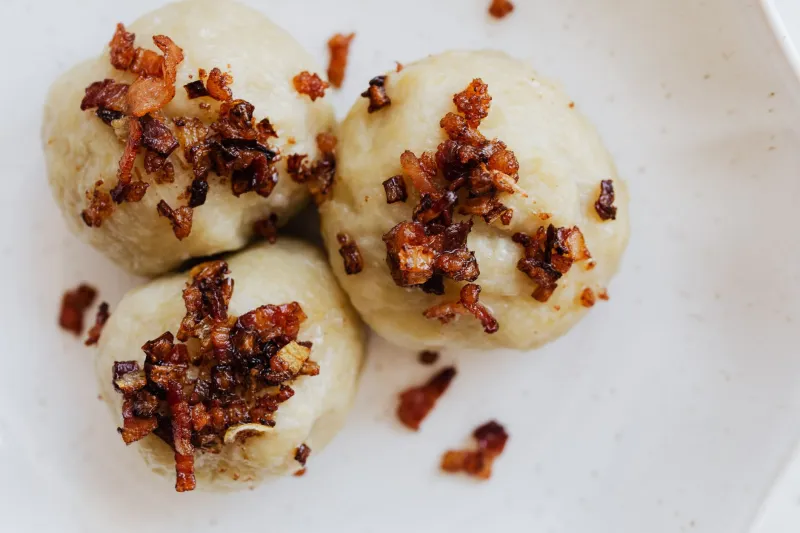
Yes, potatoes get boiled and mashed. But that's just the beginning. Raw grated potatoes are the base for cepelinai — those legendary zeppelin-shaped dumplings stuffed with seasoned ground meat and served with a sour cream and bacon sauce that makes grown adults emotional. The grating process is labor-intensive, the mixture requires squeezing out moisture and combining raw and cooked potato in just the right ratio, and the result is something completely unlike any dumpling you've had before. Dense, satisfying, and deeply comforting in a way that's hard to articulate.
Grated potato also goes into bulviniai blynai, the crispy potato pancakes that show up at nearly every family gathering. Thin, lacy at the edges, golden in a cast iron pan, and eaten immediately while hot — they're the kind of thing that disappears off the plate before you've finished making the last batch.
Then there's kugelis, a potato pudding baked in a deep dish until it sets into something almost custard-like in texture, rich with eggs and bacon, with a crust on top that crackles when you cut into it. It's one of those dishes that sounds simple on paper and tastes like something a grandmother spent all day making — because she did.
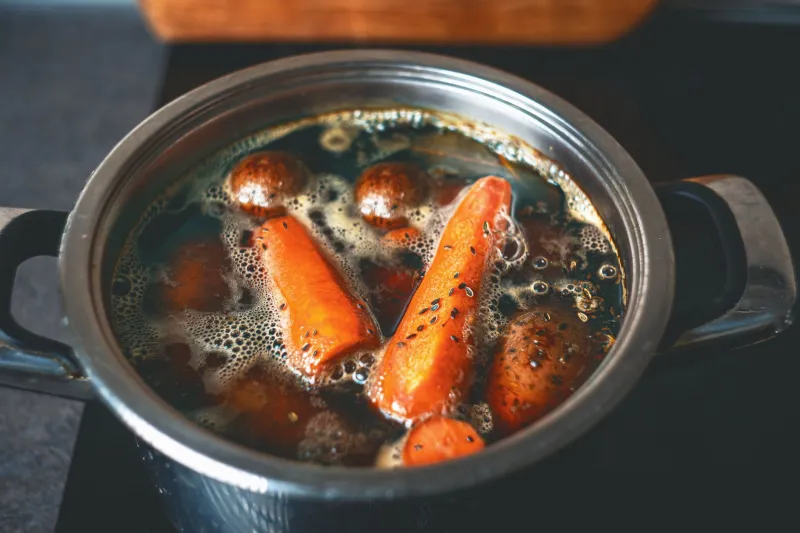
Potatoes get fermented in some traditional preparations, layered into soups, stuffed into dumplings made from other doughs, roasted with caraway seeds, and mashed with enough butter to make a cardiologist nervous. They show up at breakfast, at dinner, and everywhere in between.
The Technique Behind the Magic
What separates Lithuanian potato cooking from the average American approach isn't just the recipes — it's the understanding of the ingredient itself.
Lithuanian cooks know, almost instinctively, that moisture is the enemy of texture. When you grate raw potatoes for cepelinai or blynai, you squeeze out as much liquid as possible before you do anything else. That step is non-negotiable. Skip it and your pancakes steam instead of fry, your dumplings fall apart in the pot, and your kugelis never sets properly.
They also understand starch. The starchy water that drains off grated potatoes isn't waste — you let it settle, pour off the liquid, and use the starch that collects at the bottom to bind your mixture. It's a trick passed down through generations, the kind of kitchen knowledge that never made it into a cookbook because everyone who needed to know it already knew.
And they understand fat. Potatoes love fat — butter, sour cream, smoked bacon fat, lard. These aren't indulgences in Lithuanian cooking; they're functional ingredients that carry flavor and improve texture. A mashed potato made with real butter and a generous spoonful of sour cream is a completely different dish than one made with skim milk and margarine.
Why American Cooks Should Pay Attention
There's a reason potatoes fell out of fashion in American cooking for a while. The low-carb wave of the early 2000s did real damage to the potato's reputation, and even now that the anti-carb panic has mostly settled down, a lot of home cooks still treat the potato as something to be minimized rather than celebrated.
That's a shame, because potatoes are genuinely one of the most nutritious, affordable, and adaptable ingredients you can keep in your kitchen. A five-pound bag costs almost nothing. Potatoes store for weeks without refrigeration. They contain meaningful amounts of potassium, vitamin C, and fiber — especially if you keep the skin on. And unlike a lot of trendy superfoods, they actually taste good.
The Lithuanian approach offers American cooks a different framework: instead of asking how to reduce the potato's presence in a meal, ask how to maximize it. What happens when the potato is the star? When you give it good fat, proper technique, and a little patience?
You get cepelinai. You get kugelis. You get a plate of blynai so good your family will stop whatever they're doing and come to the kitchen.
Start Simple, Then Go Deeper
If you've never cooked Lithuanian-style with potatoes, the easiest entry point is bulviniai blynai. All you need is a few large russet potatoes, an egg, a small onion, a little flour, salt, and a hot pan with oil or butter. Grate the potatoes and onion together, squeeze out the moisture thoroughly, mix in the egg and flour, and drop spoonfuls into the pan. Flatten them slightly. Cook until deeply golden on both sides. Serve with sour cream.
That's it. That's the whole recipe. And the first time you make them, you'll understand immediately why Lithuanian families have been eating them for generations.
Once you've got the pancakes down, move to kugelis. Then, when you're feeling ambitious, try cepelinai. Each recipe teaches you something new about what a potato can do when you stop treating it like a side dish and start treating it like the main event.
At Mama & Papa Lithuania, we believe that old-world ingredients deserve new-world attention. And the potato — patient, practical, endlessly adaptable — has been waiting a long time for its moment in the American kitchen spotlight.