Start Small, Taste Big: The Lithuanian Secret to Raising Kids Who Actually Eat
If you've ever sat across from a seven-year-old who has declared war on anything green, you know the particular exhaustion of the picky eater standoff. You've probably tried the sticker charts, the "one bite" rule, the smoothie disguises. Maybe you've even Googled whether it's developmentally normal for a child to survive on buttered noodles and shredded cheese for three consecutive weeks.
Lithuanian grandmothers didn't Google that. They already knew the answer — and it had nothing to do with hiding vegetables in brownies.
At Mama & Papa Lithuania, we hear this story constantly from parents who've watched our recipes in action: kids who won't touch a casserole at home will clean a bowl of bulviniai blynai (potato pancakes) at the table before anyone's even sat down. It's not magic. It's method.
The Philosophy Behind the Plate
Western parenting advice tends to lean on repetition as the fix for picky eating. The popular "exposure model" suggests offering a new food ten, fifteen, sometimes twenty times before a child accepts it. It's not wrong, exactly — but it treats every new food as a separate battle to be won.
Traditional Lithuanian cooking takes a different approach. Instead of introducing new foods repeatedly, it introduces variations on familiar ones. The flavors a child already trusts — the slight tang of cultured dairy, the earthiness of potato, the gentle smoke of cured meat — become the foundation. New ingredients don't arrive as strangers. They arrive as neighbors.
Think about how rye bread works in a Lithuanian household. A toddler starts with a soft, mild rye. Over months and years, the bread gets a little darker, a little more sour, a little denser. By the time they're eating the full, deep-fermented loaf that adults love, they didn't make a leap — they took a long, comfortable walk.
That's the model. Gradual. Respectful of where the child's palate actually is, rather than where you wish it were.
Familiar First, Brave Later
Here's how this plays out practically in a Lithuanian kitchen, and how you can adapt it at home.
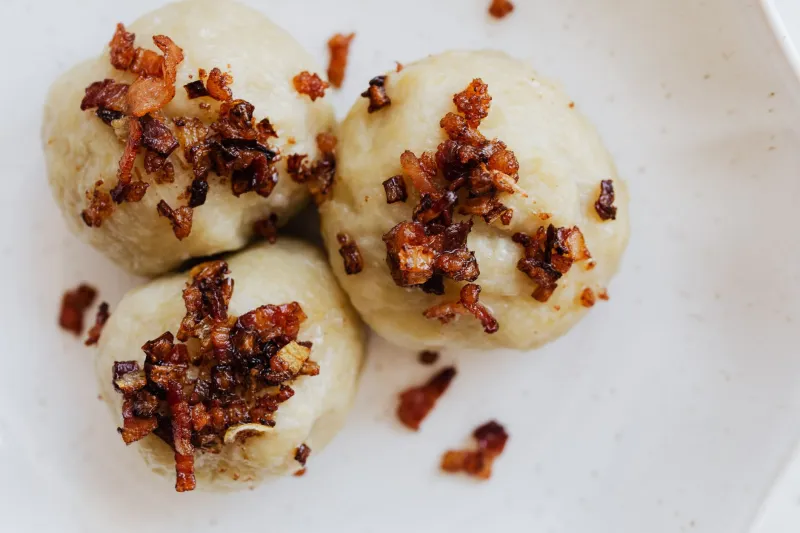
Start with what they already love and build from there. If your kid is obsessed with mashed potatoes, that's your entry point — not your limitation. In Lithuanian cooking, potatoes show up in dozens of forms: mashed, fried into pancakes, boiled in their skins, baked into cepelinai (stuffed dumplings), mixed into soups. Each version shares that familiar, comforting potato flavor, but the texture, presentation, and supporting ingredients shift slightly each time.
A child who loves plain mashed potatoes can usually be coaxed into potato pancakes (same base flavor, crispier texture). From there, potato pancakes with a small dollop of sour cream. Then potato pancakes with sour cream and a tiny bit of dill. You haven't forced a new food — you've expanded a beloved one.
Use sour cream as a bridge ingredient. This is genuinely one of the most underrated tricks in the Lithuanian kitchen. Sour cream is mild, creamy, and familiar enough that most kids accept it without protest. In traditional cooking, it gets paired with almost everything — soups, dumplings, pancakes, beet dishes, even some breads. Once a child is comfortable with sour cream as a topping, it becomes a soft landing pad for new flavors. A bowl of cold beet soup (šaltibarščiai) that looks alarming in its hot-pink glory becomes a lot less threatening when a kid has learned to trust the sour cream swirled on top.
Don't fight the broth phase. Lithuanian soups are a staple precisely because they're endlessly adjustable. A simple chicken broth with soft noodles is a perfectly legitimate dinner for a young child. Over time, you add a carrot. Then a parsnip. Then a little dill floating on top. The broth flavor they love is always there — it's just getting richer and more complex as their palate catches up.
Repetition With Variation — Not Just Repetition
This is the key distinction. Putting a pile of steamed broccoli on a plate fifteen nights in a row is repetition. Offering broccoli roasted in butter, then broccoli in a potato soup, then broccoli alongside a familiar pork dish — that's repetition with variation. The child isn't being asked to conquer broccoli. They're being invited to meet it in different contexts, always alongside something they already trust.
Lithuanian weeknight dinners are naturally structured this way. A pot of kopūstų sriuba (cabbage soup) might appear Monday with a chunk of rye bread. Wednesday, leftover cabbage gets fried with a little bacon and served over noodles. Friday, cabbage shows up again in a dumpling filling. By the end of the week, a child who claimed to hate cabbage has eaten it three times — and probably didn't notice.
What This Looks Like at the American Table
You don't need to overhaul your kitchen or track down specialty ingredients to use this approach. A few simple shifts can make a real difference.
Anchor new flavors to trusted textures. If your kid loves crispy things, introduce new flavors in crispy form first. If they're a soup kid, new vegetables go in the soup before they appear anywhere else.
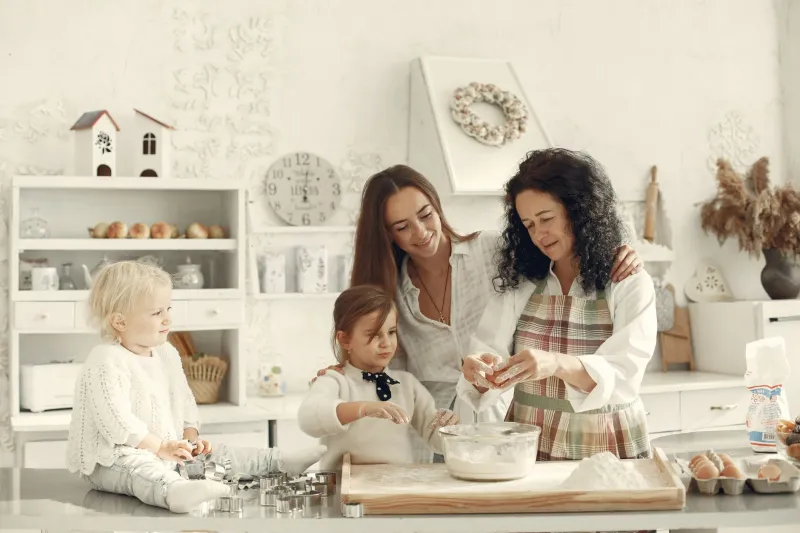
Let kids see the ingredient in its whole form. Lithuanian cooking has always been close to the source — potatoes come out of the ground, cabbage comes off the head, dill grows in the garden. When kids see where food comes from and handle it in the kitchen, unfamiliar ingredients become less threatening. Let them rinse the beets. Let them tear the dill. Involvement builds ownership.
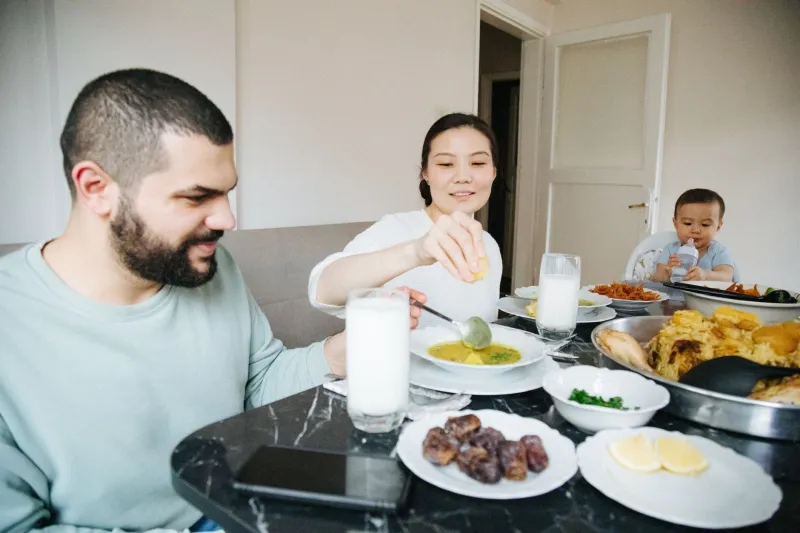
Stop treating dinner as a performance. One of the quieter lessons from the Lithuanian table is that food isn't a test. Nobody applauds when a child eats their vegetables, and nobody makes a scene when they don't. Food just appears, it's shared, and the expectation is simply that everyone eats together. That low-stakes atmosphere does more for adventurous eating than any reward system.
The Long Game
Raising a kid who eats well isn't a sprint. It's more like tending a garden — you plant things, you water them consistently, and you trust the process even when nothing looks like it's happening above the surface.
Lithuanian cooking was never designed to be exciting or trendy. It was designed to nourish the same people, at the same table, across a lifetime. And somewhere in that quiet consistency — the same soups reappearing in new forms, the same base flavors expanding slowly outward — kids learn that food is safe to explore.
That's the cure for picky eating, if there is one. Not a trick. Not a technique. Just a table where the familiar is always present, and the new always has somewhere comfortable to land.